GUIDES · ARROWS ESCAPE
What moves first? Why order puzzles are so satisfying
Some of the most relaxing puzzles ask a single question again and again: what has to happen first? Here is why that question is so satisfying, and how to get better at answering it.
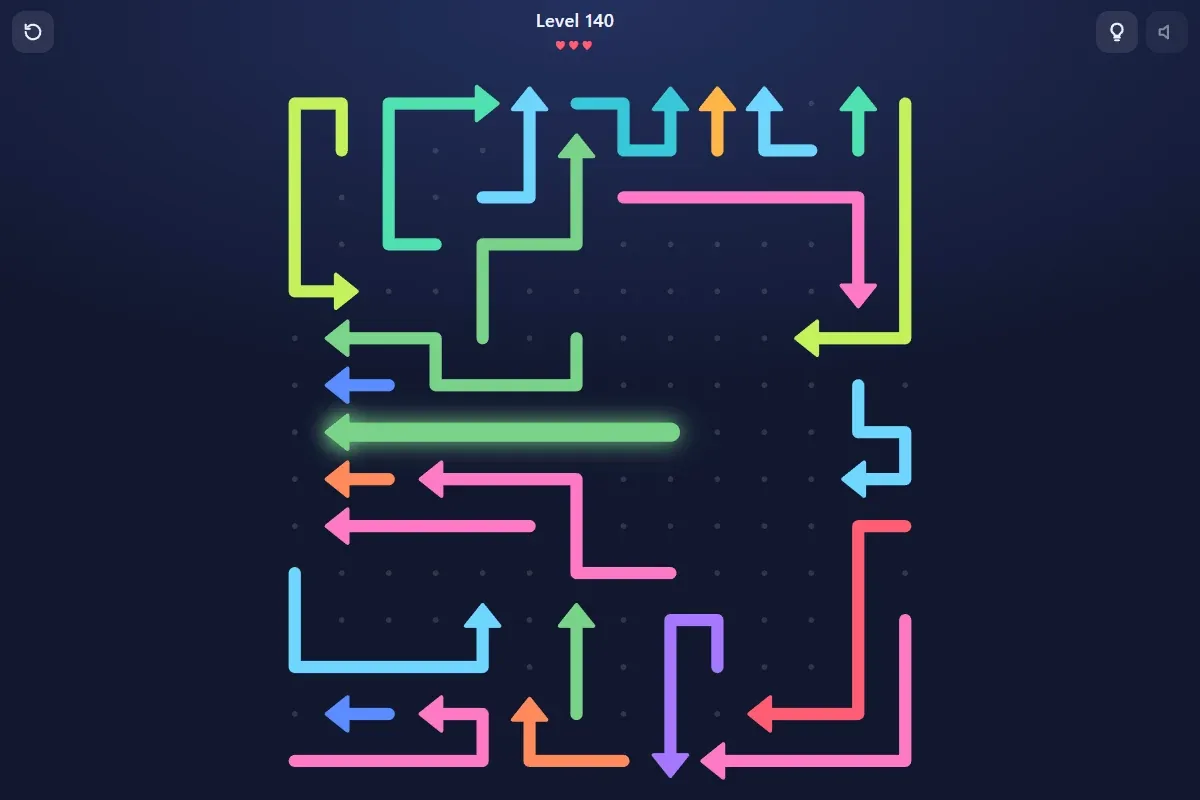
Puzzles about dependencies
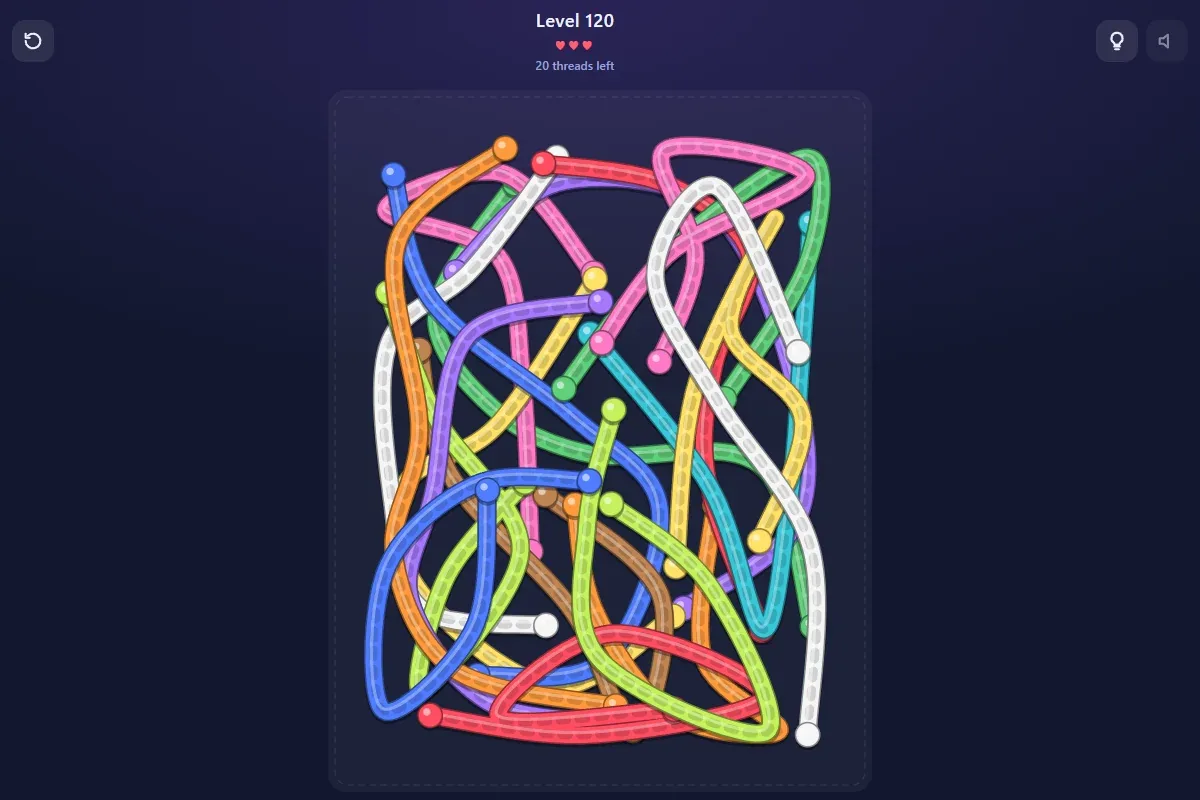
In Arrows Escape an arrow can leave only after the arrows in its way have gone. In Untie Threads a thread comes loose only after the threads lying on it have been pulled. In both games every piece depends on some others, and solving the level means finding an order that respects all of those dependencies.
Computer scientists call this kind of order a topological order: a list in which everything comes after the things it depends on. Build systems, course prerequisites and recipe steps all have the same structure. You do not need the term to solve the puzzles, but it explains why they feel so tidy: there is always a correct next step, and taking it makes the rest simpler.
Why it feels good
Order puzzles give a steady stream of small wins. Each correct move removes something from the board and reveals the next opportunity, so progress is visible all the time. There is little hidden information and no luck: if a move is available, it was always available, and you simply had not seen it yet. That clarity is what makes these games good for a short, calm break.
Three habits that transfer between games
1. Start where there are fewest constraints
Pieces with the least in their way are the obvious first moves: arrows on the rim pointing outwards, or threads that cross only one or two others. Clearing them first is quick, and it uncovers more of the board.
2. After each move, look at what it freed
Instead of scanning the whole board after every move, look only at the pieces that were blocked by the one you just removed. That small area is where the next free move most likely is. Experienced players solve big boards this way, one neighbourhood at a time.
3. Work backwards when you are stuck
If you cannot find a free piece, pick any piece and ask what it is waiting for, then what that piece is waiting for, and so on. The chain always ends at something that is free right now. This is exactly how a hint system finds its suggestion.
Order in a different form: Bottle Pop
Bottle Pop asks a related question. There is no "blocked" piece, but the order in which your line visits the bottles decides how much ink you use and how many stars you earn. The best routes usually visit nearby bottles in one sweep and leave the awkward ones for the end, the same "easy things first, look at what that opens" thinking in another shape.
Mistakes are information
In Arrows Escape and Untie Threads a wrong tap costs a heart, but it also tells you something: the game shows what was in the way. Treat that as a clue rather than a failure. The next attempt will be faster because you now know one dependency on the board.
Short sessions work best
Order puzzles reward fresh eyes. If a level stalls, close it and come back later: a board that looked impossible after ten minutes often shows its first free piece within seconds the next time. Your progress in all three games is saved in your browser, so the level is waiting for you.
Read the full guides for Arrows Escape, Untie Threads and Bottle Pop.
Questions players ask
Which games on My Game Basket are order puzzles?
Arrows Escape and Untie Threads are pure order puzzles. Bottle Pop is related: the order in which your line visits the bottles decides how much ink you use.
Do these games rely on luck?
No. Arrows Escape and Untie Threads have no random events during play; every level can be solved by careful reading of the board.
What is the quickest way to get better?
After every move, look at what it freed. Checking that small area first is much faster than scanning the whole board each time.
Are hints cheating?
Not at all. A hint shows one free move. Many players use one on a hard level, then replay the level without help for the best rating.